The best choice for free ai companion chat online depends on what the reader needs after the first click: one character role and one opening scenario. The strongest free ai companion chat online article helps the reader judge voice, boundaries, discovery flow, and session quality before building a longer routine. For tavernai.app, start with Tavern AI; bring in Browse All Characters only when it clarifies the next decision.
The practical version starts with evidence the reader can see: one character role, one opening scenario, and whether the voice and boundaries still feel coherent after a short chat. Use Tavern AI - Chat & Create with AI Characters | Tavern AI for the local workflow, then read SillyTavern's Characters documentation and SillyTavern's Tags documentation as neutral references for structure and verification. That matters for evaluators comparing ai companion chat options and wanting a shortlist with tradeoffs.
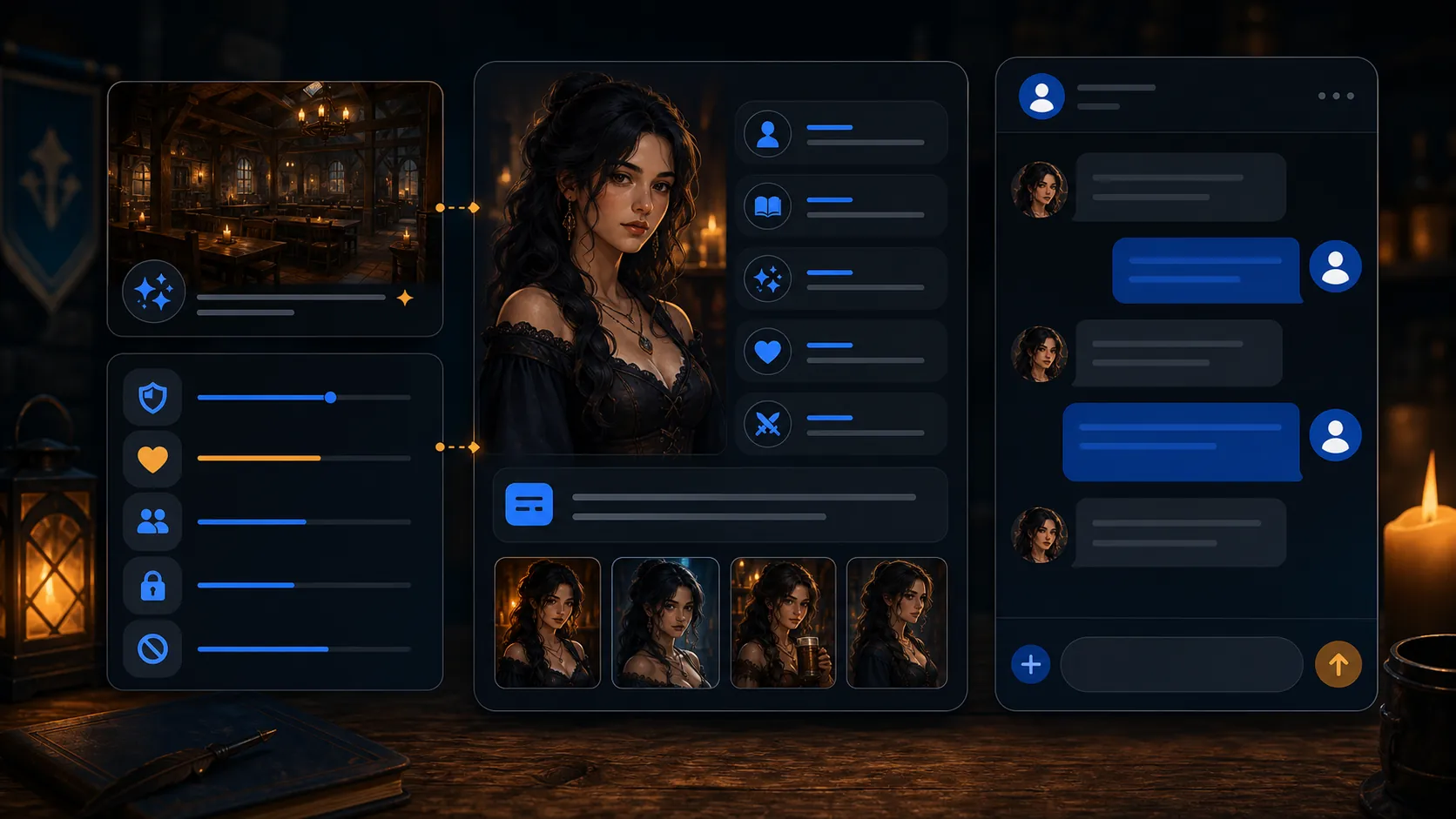
The article moves through Fast Picks for Different AI Companion Chat Sessions, Selection Criteria That Matter After the First Click, and Use Cases Where AI Companion Chat Makes Sense so the reader can define the decision, test it once, and choose a next step.
Key Takeaways
- Read free ai companion chat online through the first useful action, not through every possible feature.
- Let Tavern AI handle the first pass before asking the reader to compare more options.
- Start with scenario-based picks so readers can choose a chat platform without a fake universal winner.
- Judge options by character fit, boundaries, discovery friction, privacy, and whether the first chat is worth continuing.
Fast Picks for Different AI Companion Chat Sessions
A credible shortlist for free ai companion chat online starts with the reader's roleplay scenario, not with a fake universal ranking. A curious beginner needs a fast first chat, clear boundaries, and an easy way to leave if the fit is wrong. A writer or heavy roleplay user can tolerate more setup only when character voice, memory, and discovery depth improve the session. Use Tavern AI as the starting point, then compare through Browse All Characters only when the first chat gives the reader something real to judge. Anchor this to beginner and advanced user. Make beginner, advanced user, budget, and speed explicit so the paragraph cannot drift into a reusable framework. The reader should be able to judge Fast Picks for Different AI Companion Chat Sessions with one character role, one opening scenario, and whether the voice and boundaries still feel coherent after a short chat.
- Decision point: use Fast Picks for Different AI Companion Chat Sessions to remove one uncertainty, not to add another general option.
- Creative writing: prioritize voice consistency, scenario control, and easy iteration.
- Character browsing: use discovery pages when the reader still needs to compare roles or styles.
- Longer roleplay: continue only when privacy, boundaries, and memory behavior feel clear enough.
Quick Picks
- Beginner: start with clear onboarding, understandable boundaries, and one easy first chat.
- Advanced User: choose deeper character controls only when they improve voice, memory, or scenario depth.
- Budget: test the free or lowest-friction path before relying on it for longer roleplay.
- Speed: pick the path that reaches a coherent first chat with the least setup.
- Tavernai.app Context: decide how this changes the first free ai companion chat online test.
That baseline matters before the reader opens Tavern AI or uses SillyTavern's Characters documentation as a reference point, because both are easier to judge when the first job is already named.
Selection Criteria That Matter After the First Click
Judging Free AI Companion Chat is less about the largest catalog and more about the first coherent conversation. The strongest picks make character fit visible quickly, keep boundaries understandable, and do not bury the reader in setup before the first useful exchange. If a platform needs too much cleanup before the roleplay feels stable, it is a weaker first recommendation even if the homepage sounds exciting. Anchor this to quality and control. Make quality, control, pricing, and workflow fit explicit so the paragraph cannot drift into a reusable framework. Make the test specific to free ai companion chat online: one character role, one opening scenario, and whether the voice and boundaries still feel coherent after a short chat.
- Decision point: use Selection Criteria That Matter After the First Click to remove one uncertainty, not to add another general option.
- Control: the reader should understand how to adjust tone, scenario, or character choice.
- Privacy: the workflow should not require unnecessary personal context.
- Staying power: the chat should still feel coherent after the first few replies.
The useful next step is to run one small character workflow test, keep the result, and ask whether it clarifies the original decision.
Use Cases Where AI Companion Chat Makes Sense
The best Free AI Companion Chat changes by roleplay use case. A casual first chat, a creative writing session, and a reusable character-card workflow each need different strengths. Treat the shortlist as a map: pick the scenario first, then choose the platform path that supports it without adding unnecessary friction. Anchor this to use case and tradeoff. Keep the checkpoints visible: use case, tradeoff, who should skip, and tavernai.app context. The reader should be able to judge Use Cases Where AI Companion Chat Makes Sense with one character role, one opening scenario, and whether the voice and boundaries still feel coherent after a short chat.
- tavernai.app check: tie Use Cases Where AI Companion Chat Makes Sense back to use case and tradeoff before recommending another path.
- Best for creative writing: options that preserve voice and scenario direction.
- Best for longer roleplay: workflows with clearer boundaries and repeatable character fit.
- Skip when the platform makes the reader guess how privacy, memory, or content boundaries work.
That keeps the Use Cases Where AI Companion Chat Makes Sense section honest for tavernai.app: the reader is reducing the next decision to something observable.
Limits That Should Change the Recommendation
Free or low-friction chat access still has tradeoffs. Privacy controls, memory behavior, content boundaries, and discovery quality matter more once the reader moves beyond a single test session. Before calling something the best option, check whether those limits match the kind of roleplay the reader actually wants. Anchor this to pricing signal and limit. Keep the checkpoints visible: pricing signal, limit, supporting evidence, and tavernai.app context. The reader should be able to judge Limits That Should Change the Recommendation with one character role, one opening scenario, and whether the voice and boundaries still feel coherent after a short chat.
- tavernai.app check: tie Limits That Should Change the Recommendation back to pricing signal and limit before recommending another path.
- Memory and continuity can help long sessions, but they also need clearer review habits.
- Broad catalogs are useful only when discovery makes character fit easier.
- Free access is strongest for a first test, not automatically for a long-term roleplay routine.
After this check, free ai companion chat online should have a clear verdict: continue with the path that worked, pause because the signal is weak, or rewrite the brief before spending more time.
Make the Next Free AI Companion Chat Decision Safer
A good final check for free ai companion chat online is to separate the first attractive output from the workflow the reader can repeat. On tavernai.app, that means matching the result to a real constraint, not a generic idea of usefulness. If the first result looks interesting but does not help evaluators comparing ai companion chat options and wanting a shortlist with tradeoffs, it is still too early to build a larger routine around it.
The review should answer three things: what worked, what needs one cleaner retry, and whether the result helps the reader choose one relevant next click. Those questions keep the decision grounded in evidence the reader can see. They also keep the workflow practical: one character role, one opening scenario, and whether the voice and boundaries still feel coherent after a short chat.
- Keep the first test small enough to finish in one sitting.
- Change one variable at a time so the result teaches something specific.
- Save the first usable version before exploring variants.
- Stop when the next retry would only make the workflow busier, not clearer.
That review makes free ai companion chat online easier to trust because the reader knows when to continue and when to pause. They can move forward when the workflow produces one clear, reusable outcome, and they can pause when the process depends on guesses the first session has not proved.
FAQ
How Do You Know If Free AI Companion Chat Is the Right Fit for Tavernai?
It is the right fit when one short session shows a stable character voice, clear boundaries, and a reason to continue. If the first chat feels random or hard to steer, choose a narrower scenario before comparing more options.
Is Free AI Companion Chat Beginner-friendly for Tavernai Readers?
Beginners can start safely when the platform makes the first role, opening message, and exit point obvious. A simple first session is better than a large catalog that leaves the reader guessing.
What Should Readers Test Before a Longer Roleplay Session?
Test one character role, one opening scenario, and one boundary check. That small test shows whether the chat can stay coherent before the reader invests more time.
When Should a Reader Pause Instead of Continuing?
Pause when privacy expectations are unclear, the character voice keeps drifting, or the reader has to add personal details just to make the chat work. Those are workflow warnings, not minor preferences.
Are Free AI Companion Chat Options Enough for Tavernai Readers?
Free options are enough for discovery and a first chat test. They are weaker when the reader needs stronger privacy expectations, memory, customization, or a longer creative roleplay routine.
Tavernai Review Rule for Free AI Companion Chat
The strongest free ai companion chat online article helps the reader judge voice, boundaries, discovery flow, and session quality before building a longer routine.
For free ai companion chat online, choose by scenario first, then verify the pick with one short test instead of chasing every option. Start with Tavern AI, then use Browse All Characters only when it improves the decision. For character and roleplay sites, the strongest path is the one that preserves voice, boundaries, and discovery flow after the first session.
For tavernai.app, the best close is one the reader can use immediately: test, compare, revise, or pause.